How to blanch and shock vegetables for bright color and texture
Blanching and shocking vegetables is a simple technique that locks in bright color, crisp-tender texture, and nutrients. With a few easy steps and a little timing, you can make vegetables look and taste fresher for salads, side dishes, or freezing. This guide walks you through the process so you can get consistent results every time.
Step 1: Prepare your equipment
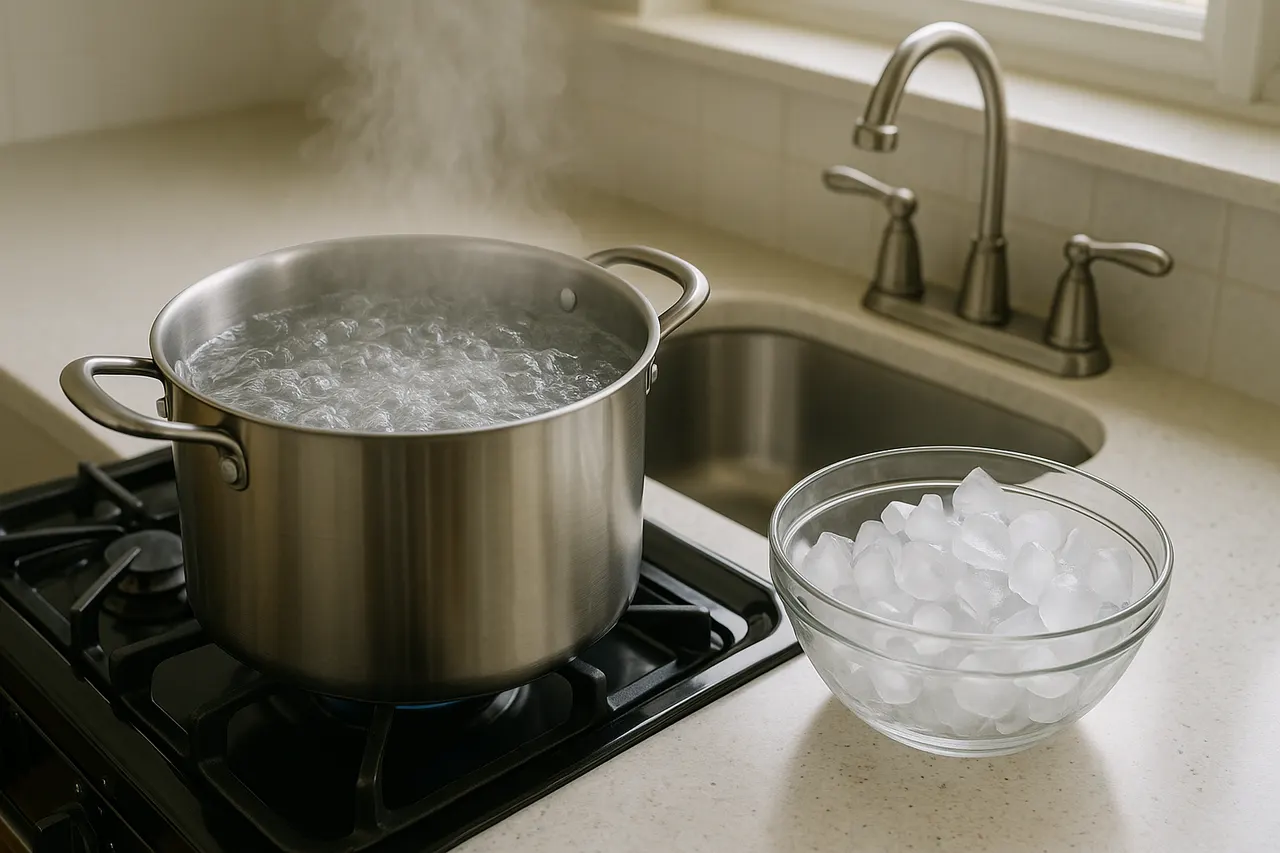
Fill a large pot with at least 2 inches of water per quart capacity and bring it to a rolling boil over high heat. While the water heats, set a large bowl in the sink and fill it with ice and cold water to create an ice bath; this will stop cooking instantly and preserve color.
Step 2: Salt the boiling water
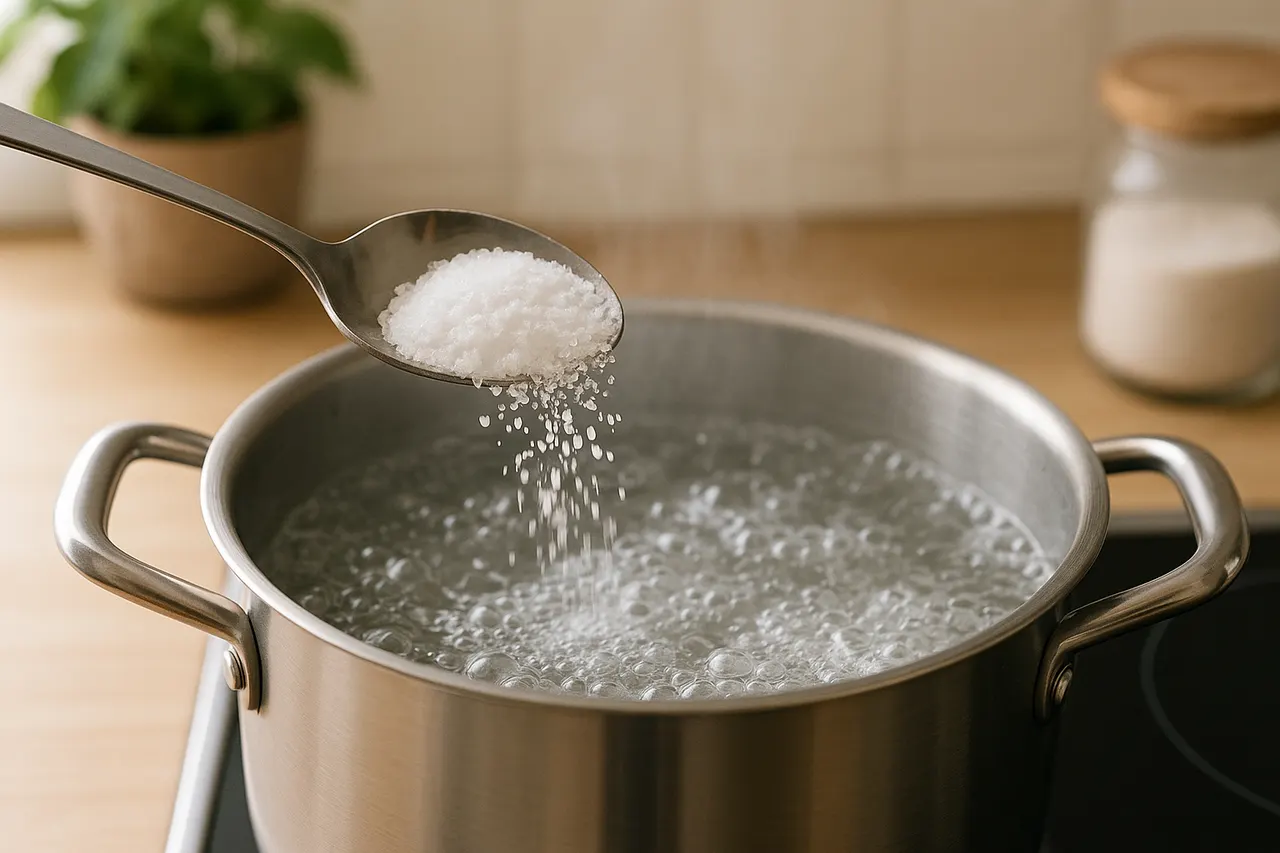
Add 1 tablespoon of kosher salt or 2 teaspoons table salt per quart of boiling water to season and help vegetables maintain color. Salted water also raises the boiling point slightly and seasons the vegetables from the inside.
Step 3: Prepare vegetables uniformly
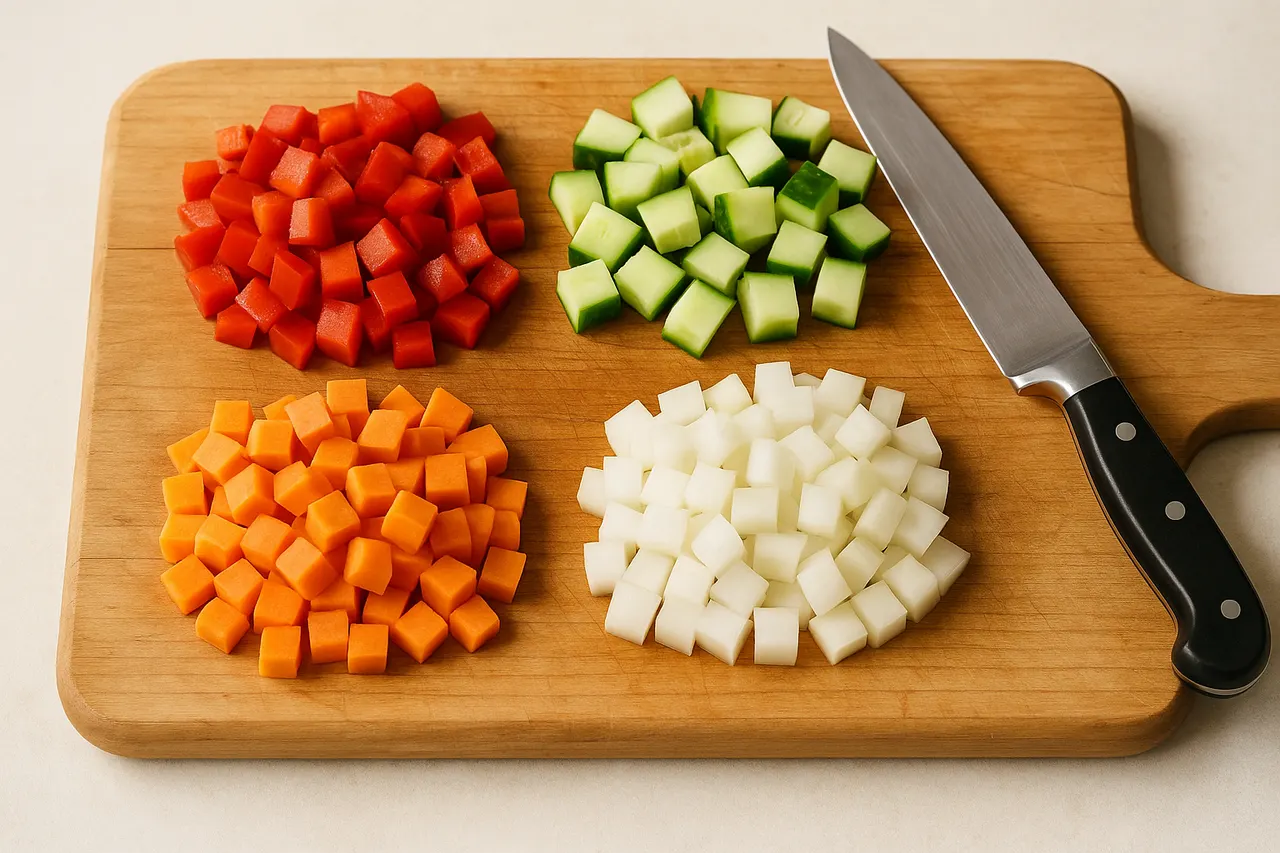
Trim, peel, and cut vegetables into uniform pieces — for example, green beans trimmed to 2-inch lengths, broccoli florets about 1–1.5 inches across, or carrot sticks 1/4–1/2 inch thick. Uniform size ensures even cooking and predictable timing.
Step 4: Test a small piece first
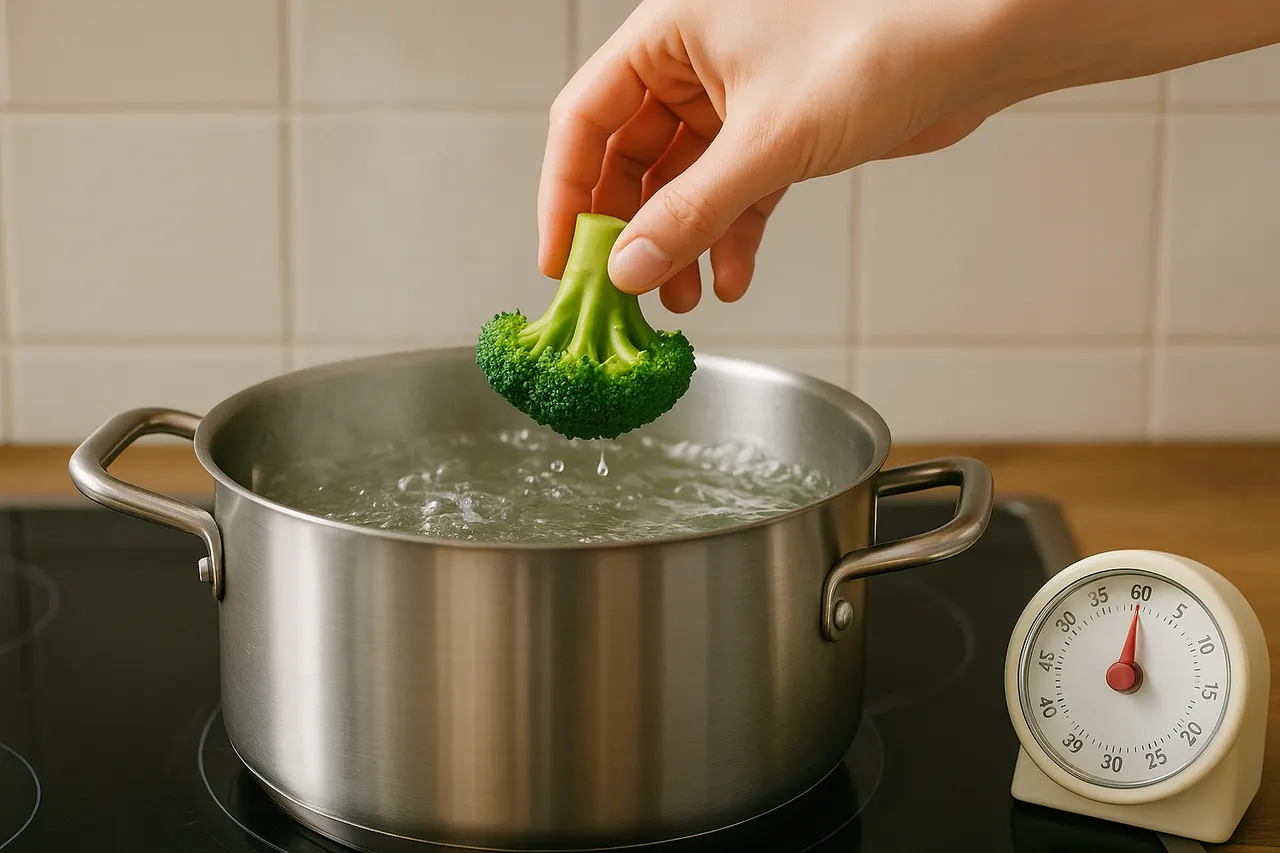
Drop one piece into the boiling water and time it to estimate doneness if you're unsure; most tender vegetables blanch in 30 seconds to 3 minutes. Use this test to adjust the final blanch time so you don’t overcook the batch.
Step 5: Blanch in measured batches
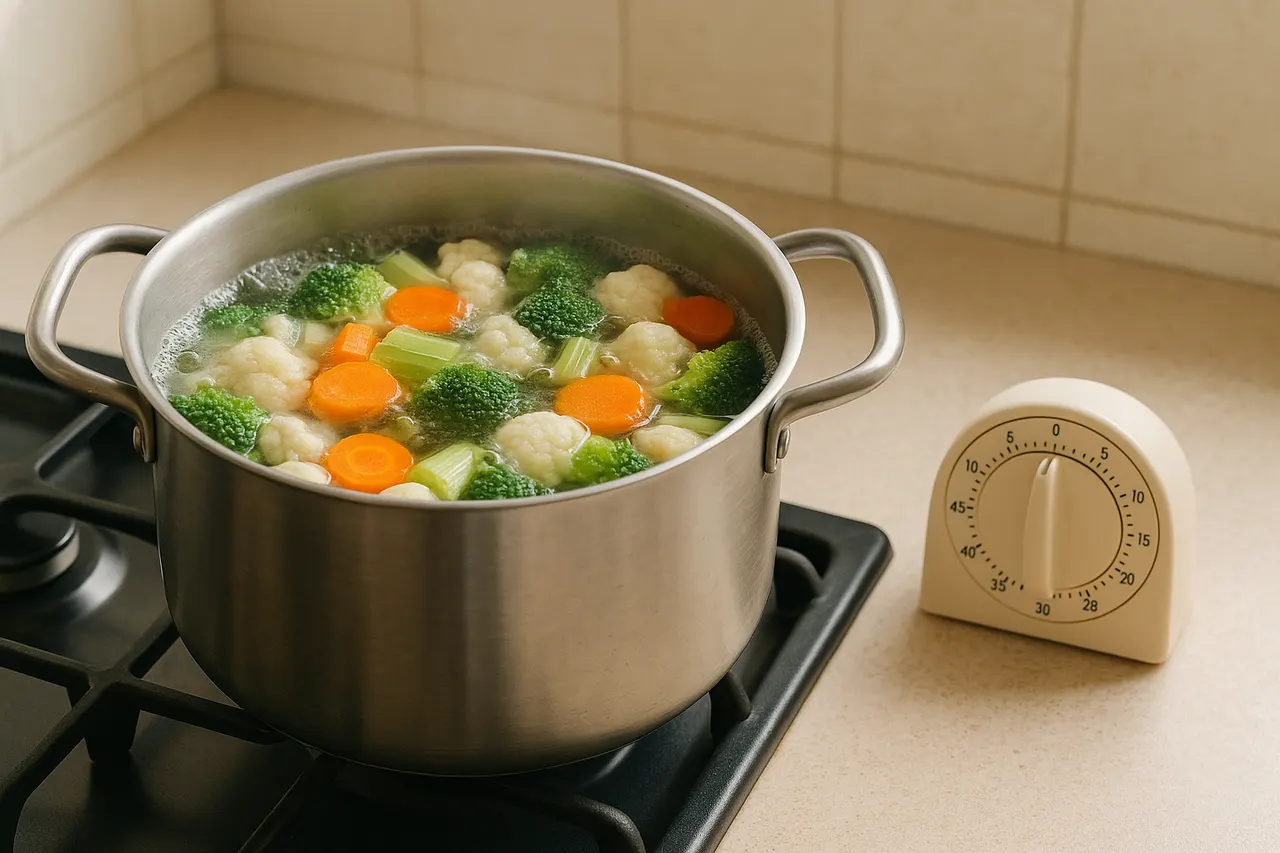
Add vegetables to the boiling salted water in a single layer or small batches so the water returns to a boil quickly; blanch for the recommended time (see common times below). Keep a running timer: green beans 2–3 minutes, broccoli florets 2–3 minutes, asparagus 2–4 minutes, peas 30–60 seconds, carrots 3–5 minutes.
Step 6: Shock immediately in ice bath
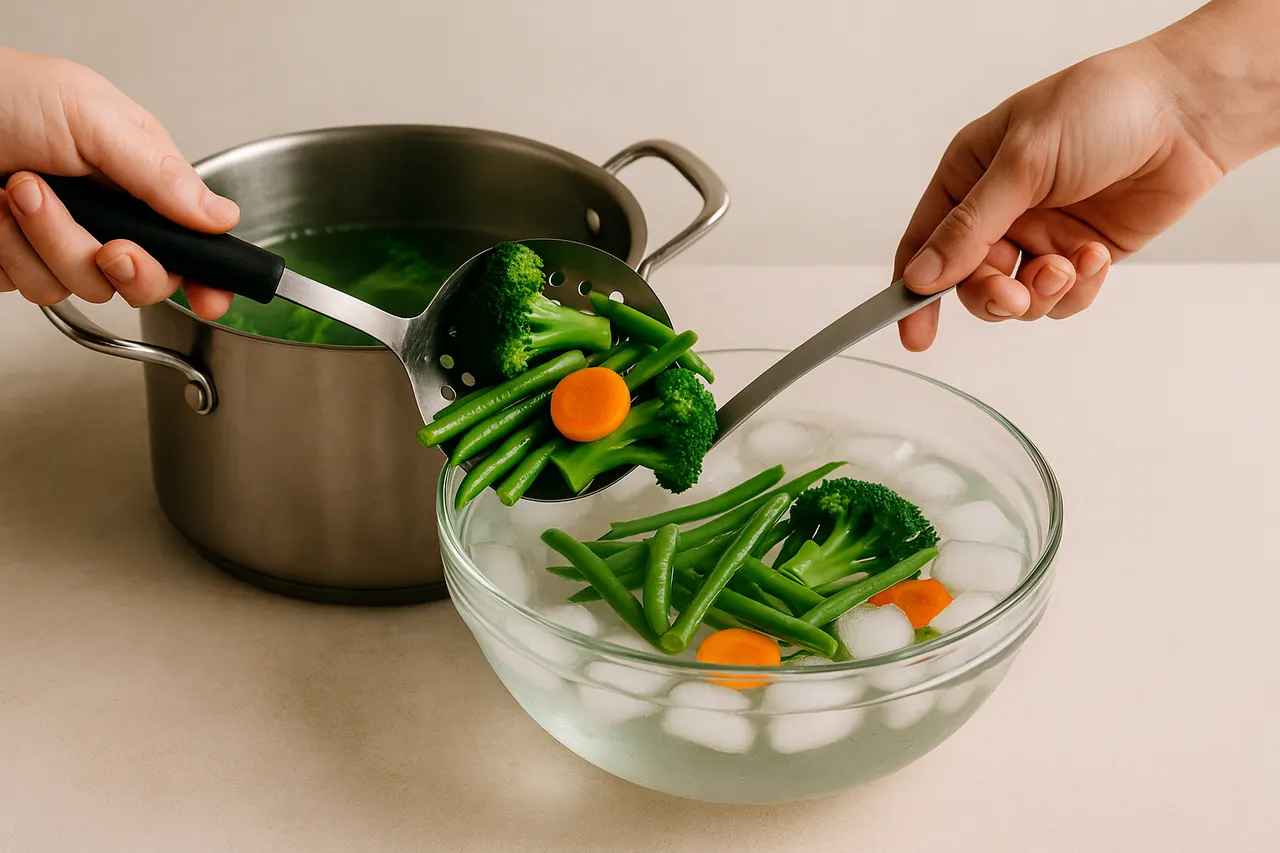
Use a slotted spoon or a mesh strainer to transfer vegetables directly from the boiling water into the prepared ice bath and leave for the same amount of time they blanched. This stops residual heat from overcooking and locks in bright color and crispness.
Step 7: Dry and store or serve
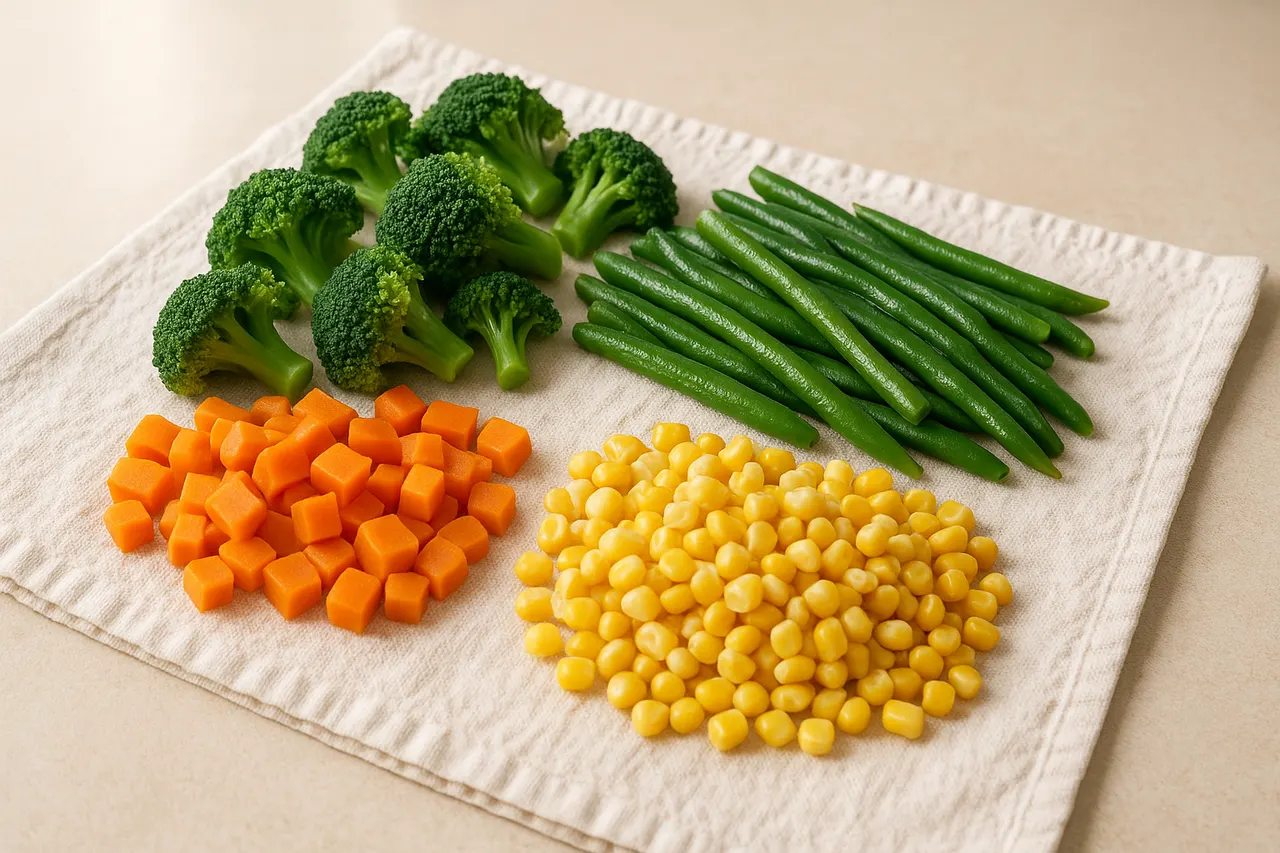
Drain vegetables well on a rack or paper towels and pat dry before serving, tossing in a little butter or oil, or before freezing. For freezing, spread in a single layer on a tray to flash-freeze 1–2 hours then transfer to airtight bags; for immediate use, serve while cool or reheat gently to preserve texture.
- Use a wide, shallow pot so water returns to a boil quickly after adding vegetables.
- Keep the ice bath ratio about 4 parts water to 1 part ice to maintain very cold temperature while shocking.
- Label frozen bags with vegetable type and date and use within 8–12 months for best quality.
- For leafy greens, roll or bundle loosely and blanch for only 15–30 seconds to avoid sogginess.
- If blanching multiple types, start with the longest-cooking items first and work toward the quickest.
- Avoid overcrowding the pot; overcrowding drops the water temperature and lengthens cooking time, leading to mushy results.
- Do not skip the ice bath — residual heat will continue cooking and dull color if you skip shocking.
- Be cautious when handling boiling water and steam to prevent burns; use long-handled tools and oven mitts as needed.
- Times vary with size and freshness; always test one piece rather than assuming a single time fits every batch.
- Do not reuse blanching water for drinking or cooking other foods due to potential loss of nutrients and flavor into the water.
Was this guide helpful?
More Food & Entertaining guides
How to make stovetop shakshuka with tender eggs and balanced tomato sauce
Shakshuka is a comforting North African–style skillet of eggs poached in a spiced tomato sauce. This guide walks you through building a balanced sauce and gently cooking tender eggs on the stovetop so yolks stay silky while the sauce is bright and flavorful.
How to make homemade sourdough starter and maintain regular feedings
Making a sourdough starter is a simple, rewarding kitchen project that captures wild yeast and beneficial bacteria to leaven bread. With just flour, water, and a little patience you can build a lively culture and keep it healthy with regular feedings. Follow the step-by-step routine below to create and maintain a starter that will power many loaves.
How to assemble and store layered salads so they don’t get soggy before eating
Layered salads are a colorful, make-ahead way to serve a crowd, but soggy ingredients can ruin the texture. With a few simple construction and storage strategies you can keep greens crisp and dressings separated for 24–72 hours. Follow these steps to assemble jars or bowls that travel well and taste fresh when served.