How to make a basic vinaigrette and properly emulsify dressings
A bright, balanced vinaigrette is the simplest way to dress salads, roast vegetables, and grains. This guide walks you through a reliable basic recipe and shows easy techniques to get a smooth, stable emulsion every time. With a few clear ratios, simple tools, and small adjustments you'll make consistently good dressings.
Step 1: Gather ingredients and tools
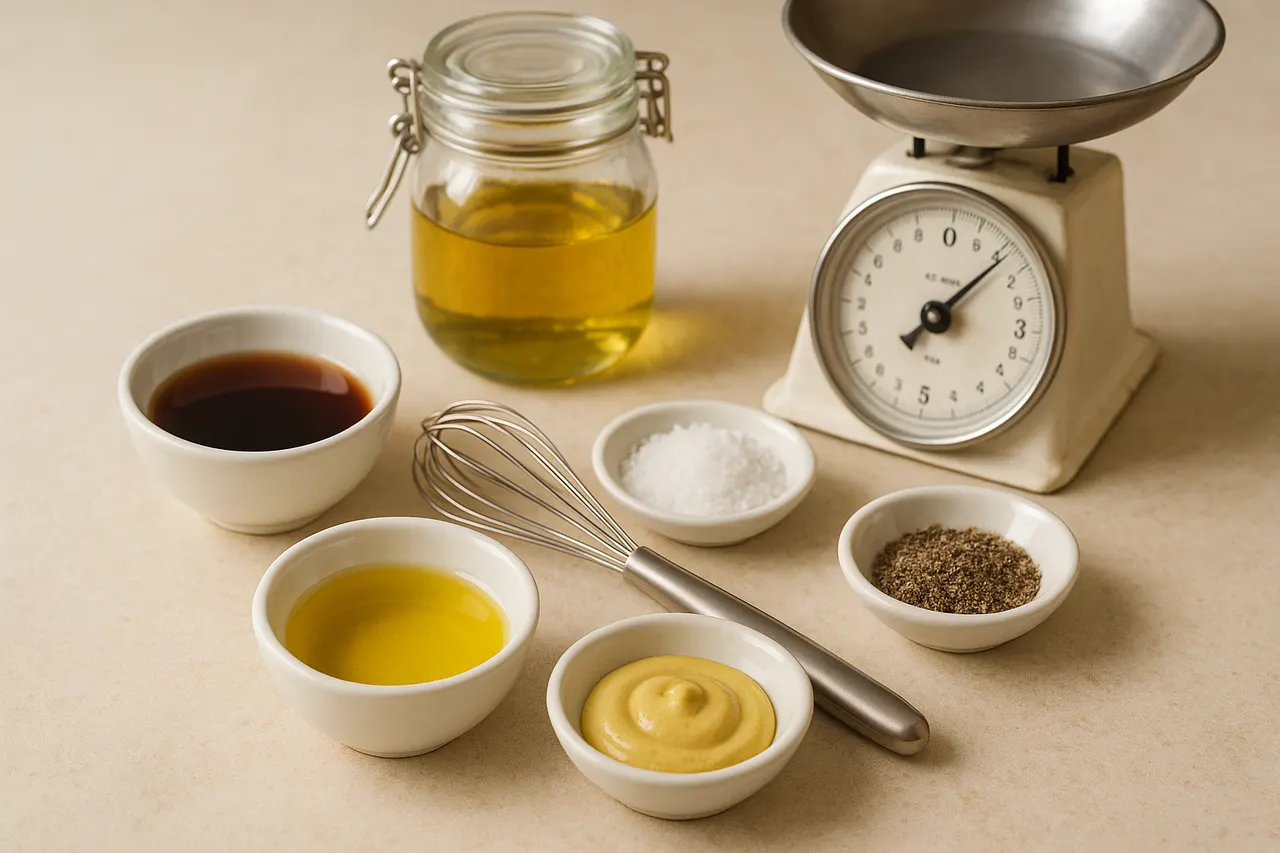
Measure 3 tablespoons of acid (vinegar or lemon juice), 9 tablespoons of neutral oil (such as canola, light olive, or avocado), 1 teaspoon Dijon mustard, 1/2 teaspoon salt, and 1/4 teaspoon freshly ground black pepper. Have a whisk, small jar with lid, or immersion blender ready; a digital scale optional but helpful for precision (use 1 part acid to 3 parts oil by volume).
Step 2: Choose your acid and oil
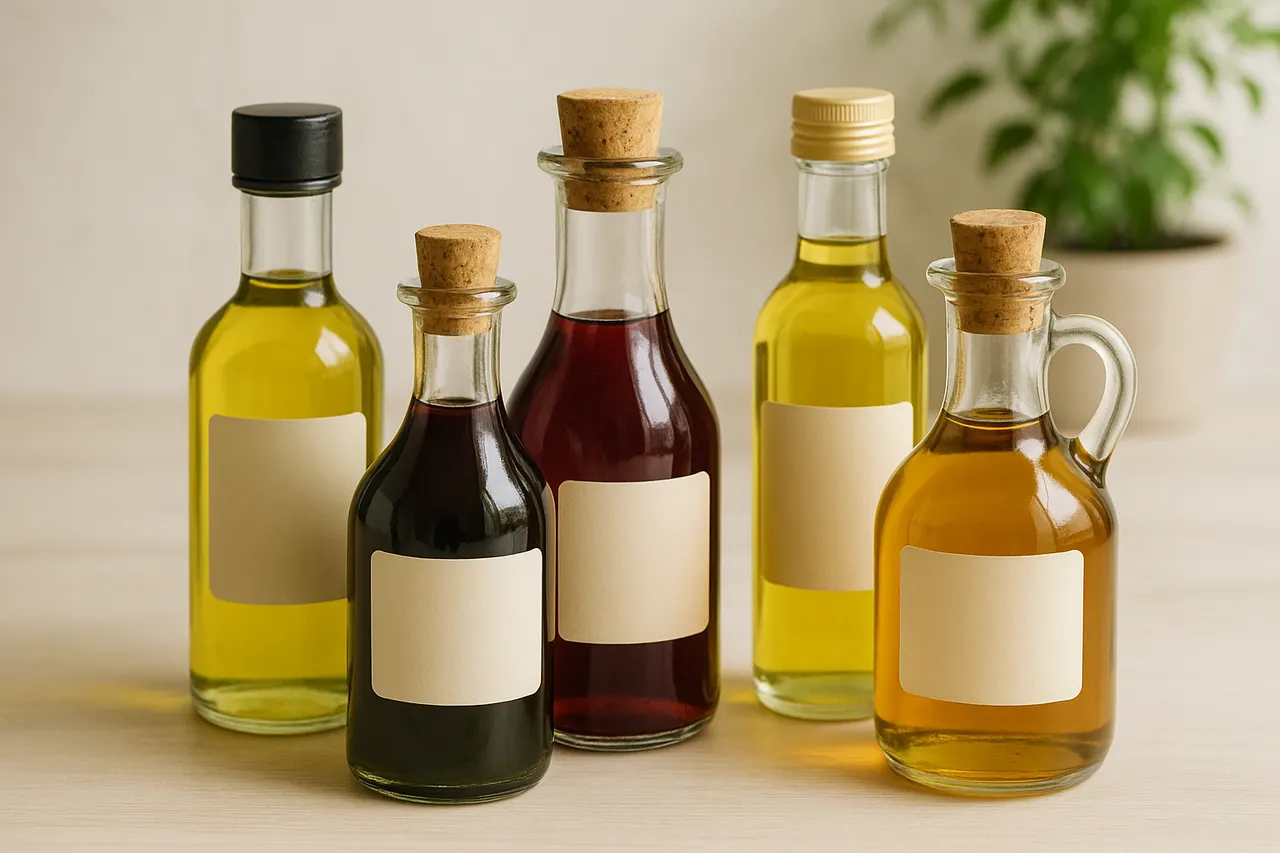
Pick an acid for flavor: white wine vinegar for mild, apple cider for fruity, or lemon for bright citrus. Choose oil for mouthfeel and flavor: extra-virgin olive oil for richness, neutral oil for a cleaner taste. Strong oils pair with milder acids to avoid bitterness; keep the 1:3 acid-to-oil ratio as your baseline.
Step 3: Add seasonings and emulsifier
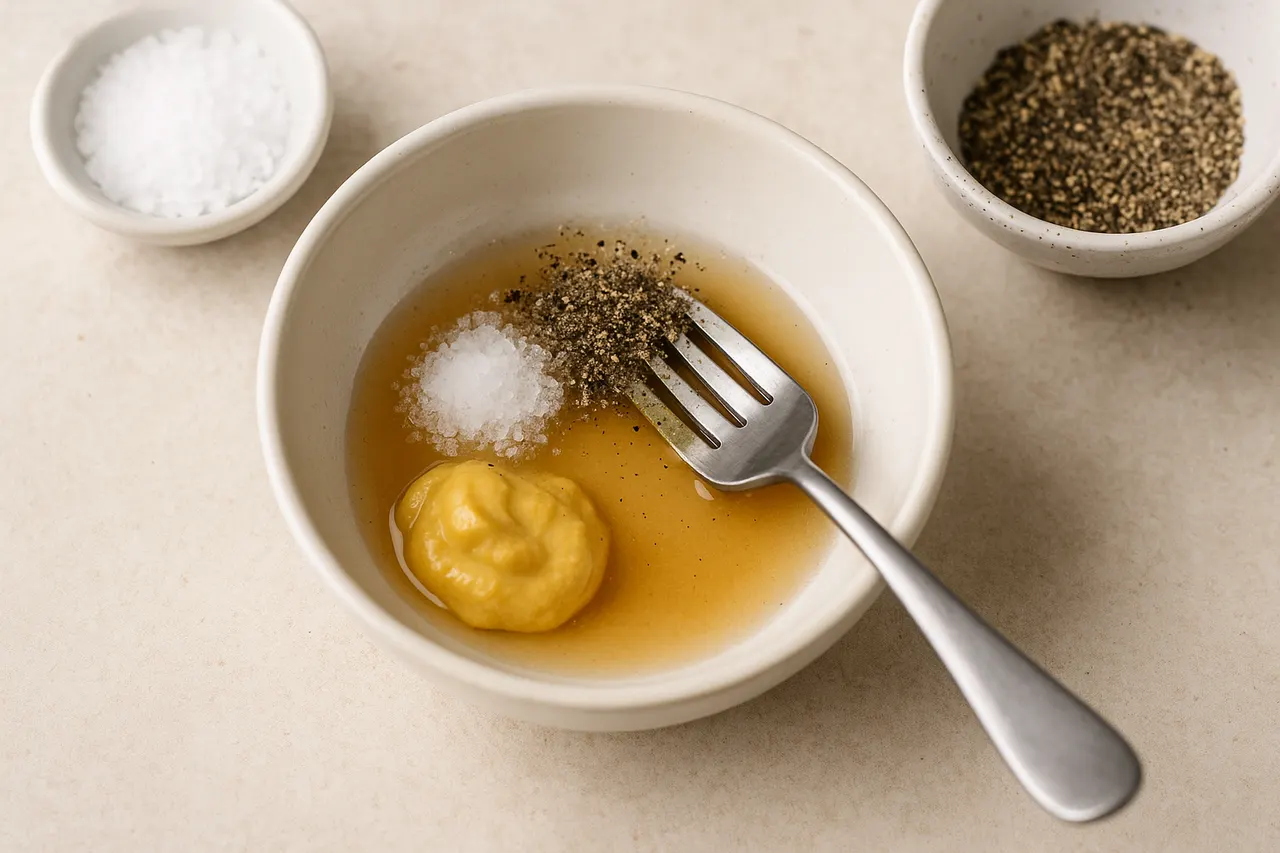
Combine the measured acid, 1 teaspoon Dijon mustard, 1/2 teaspoon salt, and 1/4 teaspoon pepper in a bowl or jar first. Mustard and an optional 1 teaspoon honey act as emulsifiers and flavor enhancers, helping droplets of oil suspend in the acid for a creamier texture.
Step 4: Slowly incorporate oil while whisking
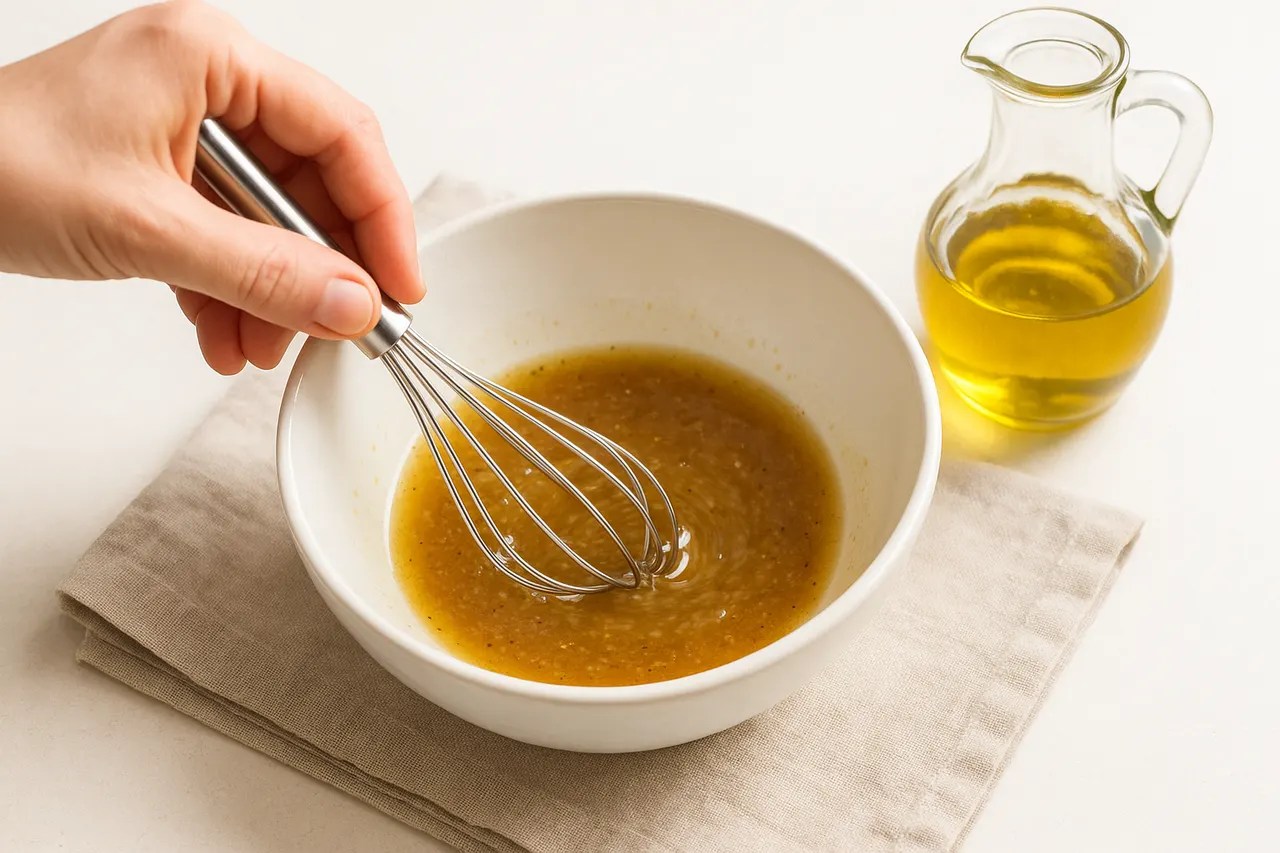
If using a whisk: hold the bowl at an angle and pour the 9 tablespoons of oil in a thin steady stream while whisking vigorously in a circular motion for about 1 minute until glossy and slightly thickened. Slow addition creates tiny oil droplets that suspend in the acid, forming a stable emulsion.
Step 5: Jar-shake method for convenience
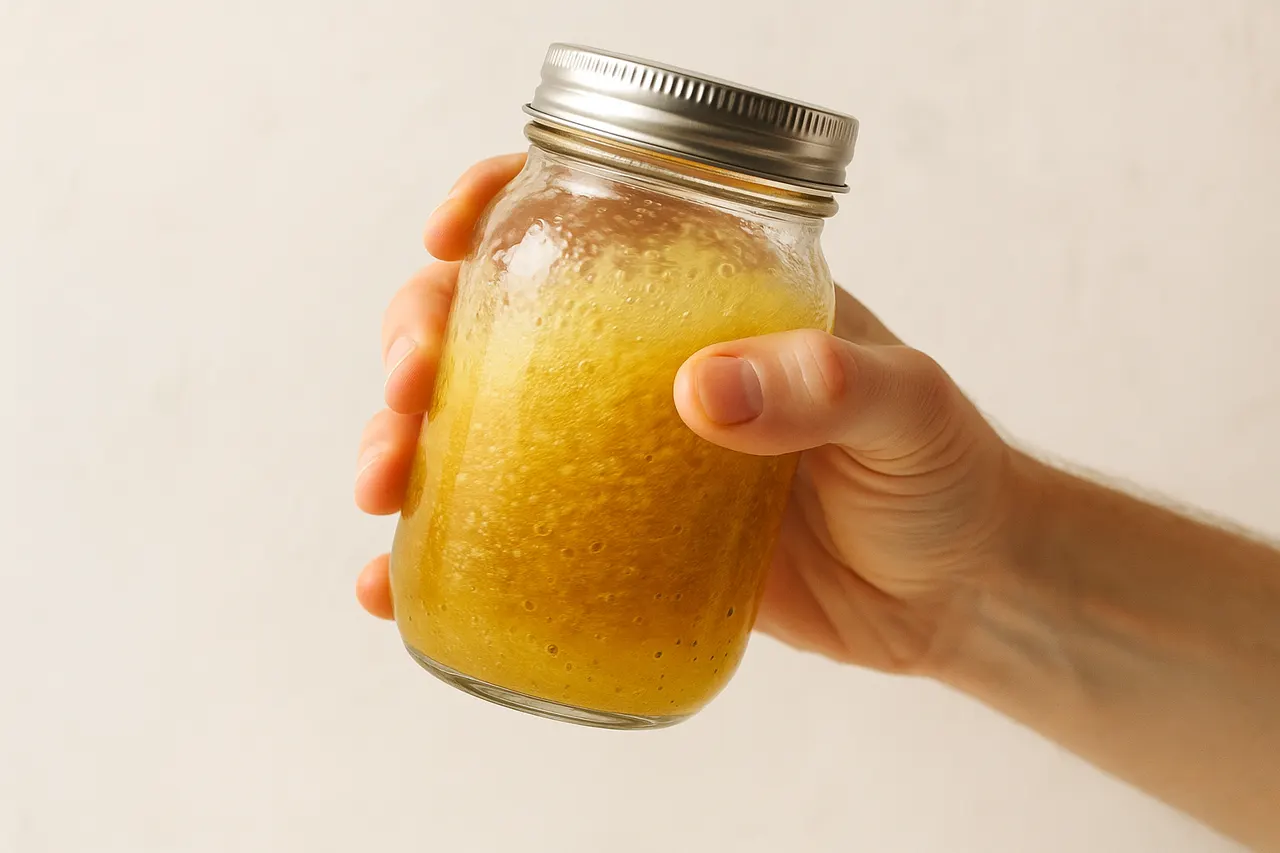
For a quick method, put all ingredients in a lidded jar with oil on top, seal tightly, and shake vigorously for 30–45 seconds. Check texture; if it's separated, shake another 15–20 seconds. The jar creates turbulence that mimics whisking, producing an emulsion without extra tools.
Step 6: Use immersion blender for robust emulsion
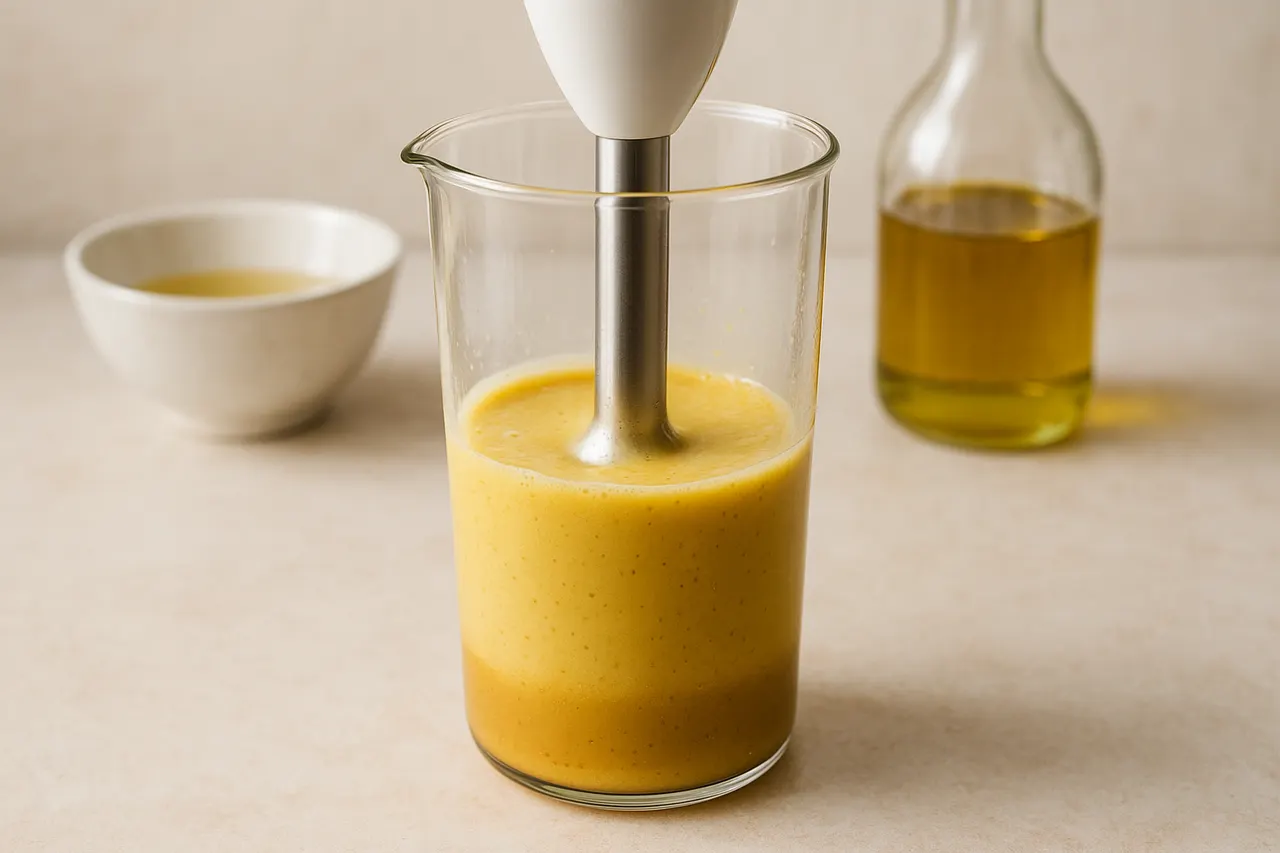
For an extra-stable, creamy dressing, blend ingredients in a tall container with an immersion blender: pulse for 10–20 seconds until thick and homogeneous. This creates very small oil droplets and is ideal if you plan to store the dressing or want a mayonnaise-like texture.
Step 7: Adjust flavor and store properly
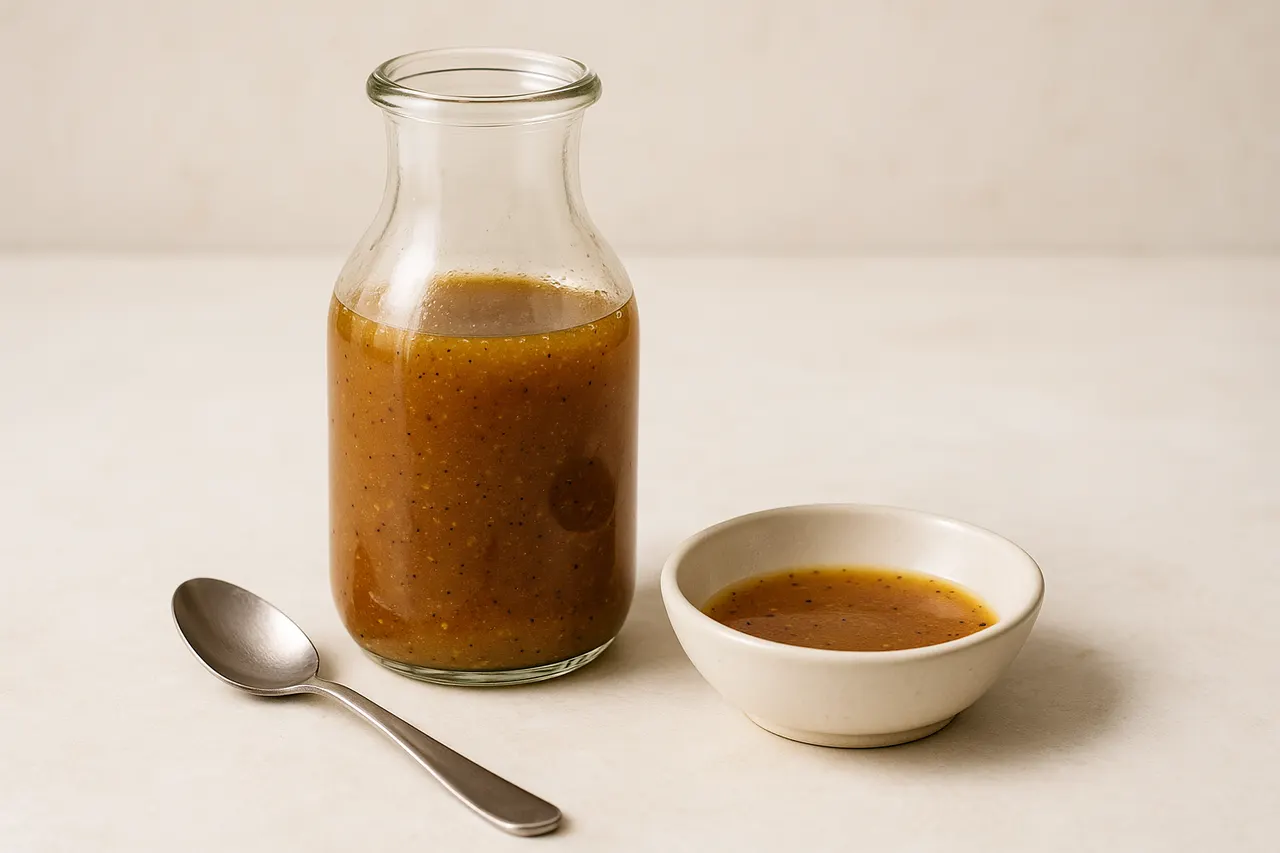
Taste and balance: add up to 1 teaspoon more acid for brightness, 1/2 teaspoon more salt for seasoning, or 1 teaspoon honey for sweetness. Store in the refrigerator up to one week; if separation occurs, bring to room temperature and whisk or shake to re-emulsify before serving.
- Stick to the 1:3 acid-to-oil ratio for everyday vinaigrette; for a sharper dressing try 1:2 and for a milder one 1:4.
- Use room-temperature ingredients so the oil and acid combine more easily; very cold oil resists emulsification.
- Add a small pinch of xanthan gum (about 1/16 teaspoon) or 1 teaspoon mayonnaise for extra stability if you plan to store the dressing longer.
- When whisking, use a circular motion and raise the whisk slightly at the end to fold air in and help emulsify.
- If using extra-virgin olive oil and you want less bitterness, dilute it with a neutral oil 50/50.
- For herb vinaigrettes, finely chop soft herbs and add them right before serving to preserve freshness.
- Do not overheat oils; heat degrades flavor and can prevent a proper emulsion.
- Avoid adding too much oil at once when whisking — pouring quickly will cause the oil to separate instead of emulsify.
- If your dressing tastes flat, don’t immediately add more salt; first add a squeeze of acid to brighten it, then re-taste.
- Discard dressings older than one week or that smell off; homemade vinaigrettes lack preservatives and can spoil.
Was this guide helpful?
More Food & Entertaining guides
How to make stovetop shakshuka with tender eggs and balanced tomato sauce
Shakshuka is a comforting North African–style skillet of eggs poached in a spiced tomato sauce. This guide walks you through building a balanced sauce and gently cooking tender eggs on the stovetop so yolks stay silky while the sauce is bright and flavorful.
How to make homemade sourdough starter and maintain regular feedings
Making a sourdough starter is a simple, rewarding kitchen project that captures wild yeast and beneficial bacteria to leaven bread. With just flour, water, and a little patience you can build a lively culture and keep it healthy with regular feedings. Follow the step-by-step routine below to create and maintain a starter that will power many loaves.
How to assemble and store layered salads so they don’t get soggy before eating
Layered salads are a colorful, make-ahead way to serve a crowd, but soggy ingredients can ruin the texture. With a few simple construction and storage strategies you can keep greens crisp and dressings separated for 24–72 hours. Follow these steps to assemble jars or bowls that travel well and taste fresh when served.