How to store fresh herbs to keep them longer
Fresh herbs brighten meals but wilt quickly if stored poorly. With a few simple techniques you can extend their life by days or even weeks while keeping flavor and texture intact. These methods cover both tender and hardy herbs so you know what to do for each type.
Step 1: Identify herb type first
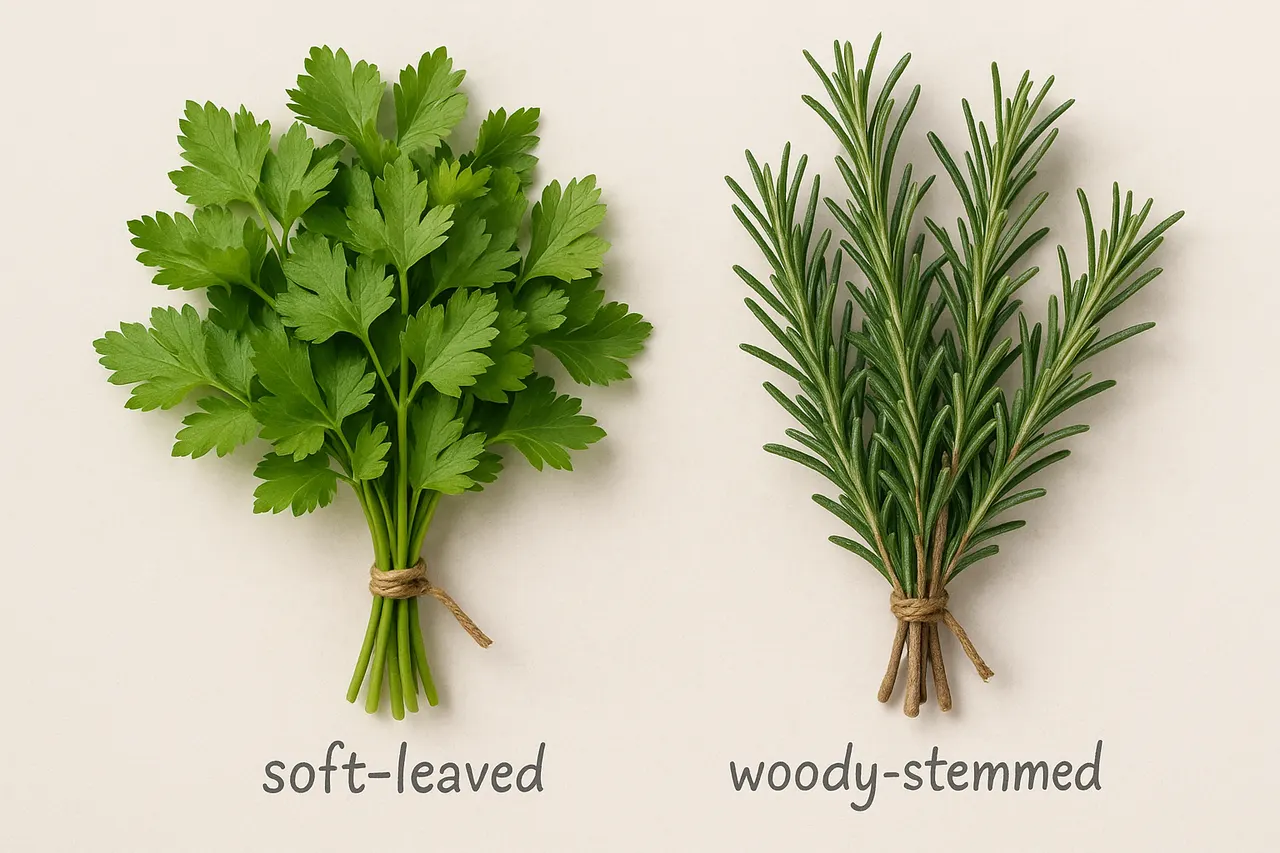
Sort herbs into tender (basil, cilantro, parsley) and hardy (rosemary, thyme, sage). Tender herbs have soft stems and bruise easily, while hardy herbs have woody stems that tolerate drier conditions; treating them differently preserves aroma and structure.
Step 2: Trim stems cleanly
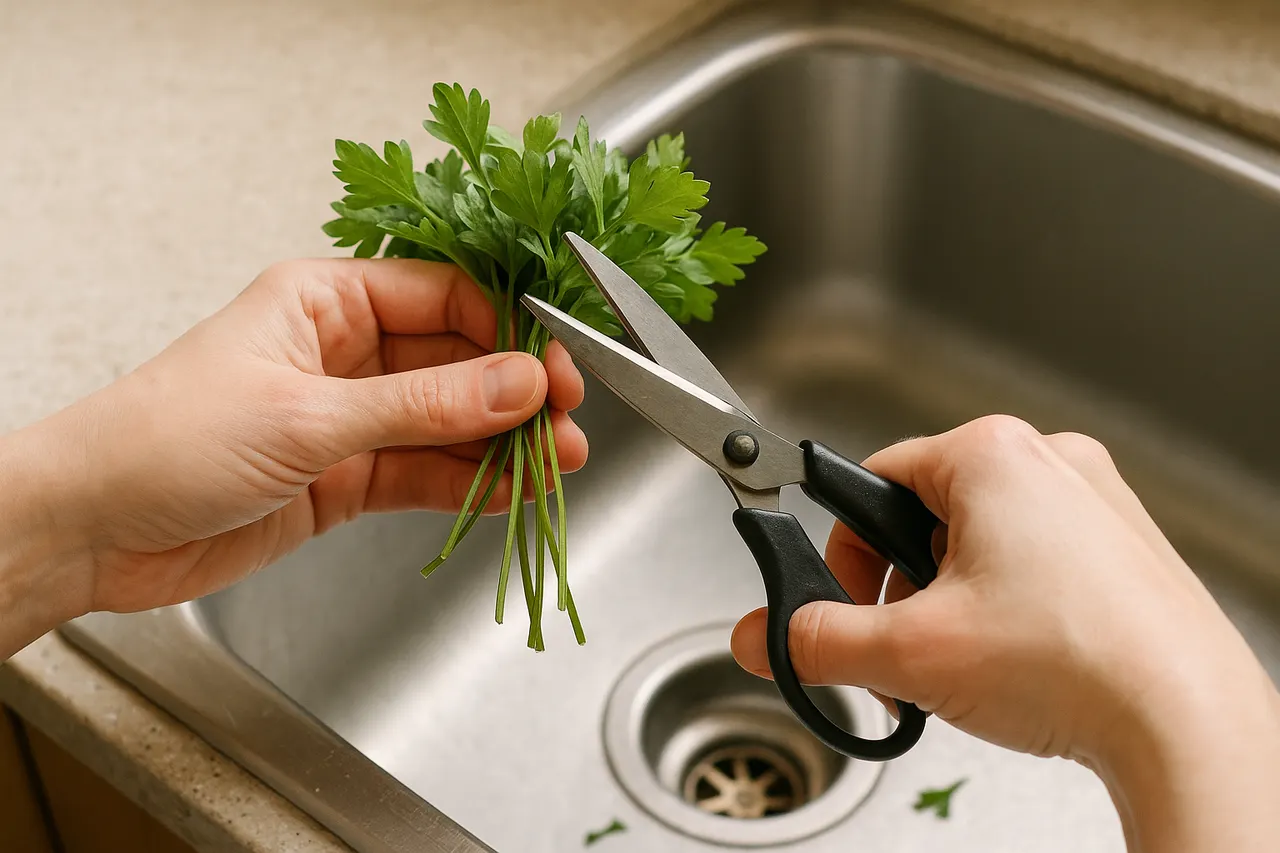
Use sharp scissors to cut about 1/2 to 1 inch off the stems before storing. A fresh cut improves water uptake and prevents wilting, similar to cutting flower stems.
Step 3: Remove damaged leaves
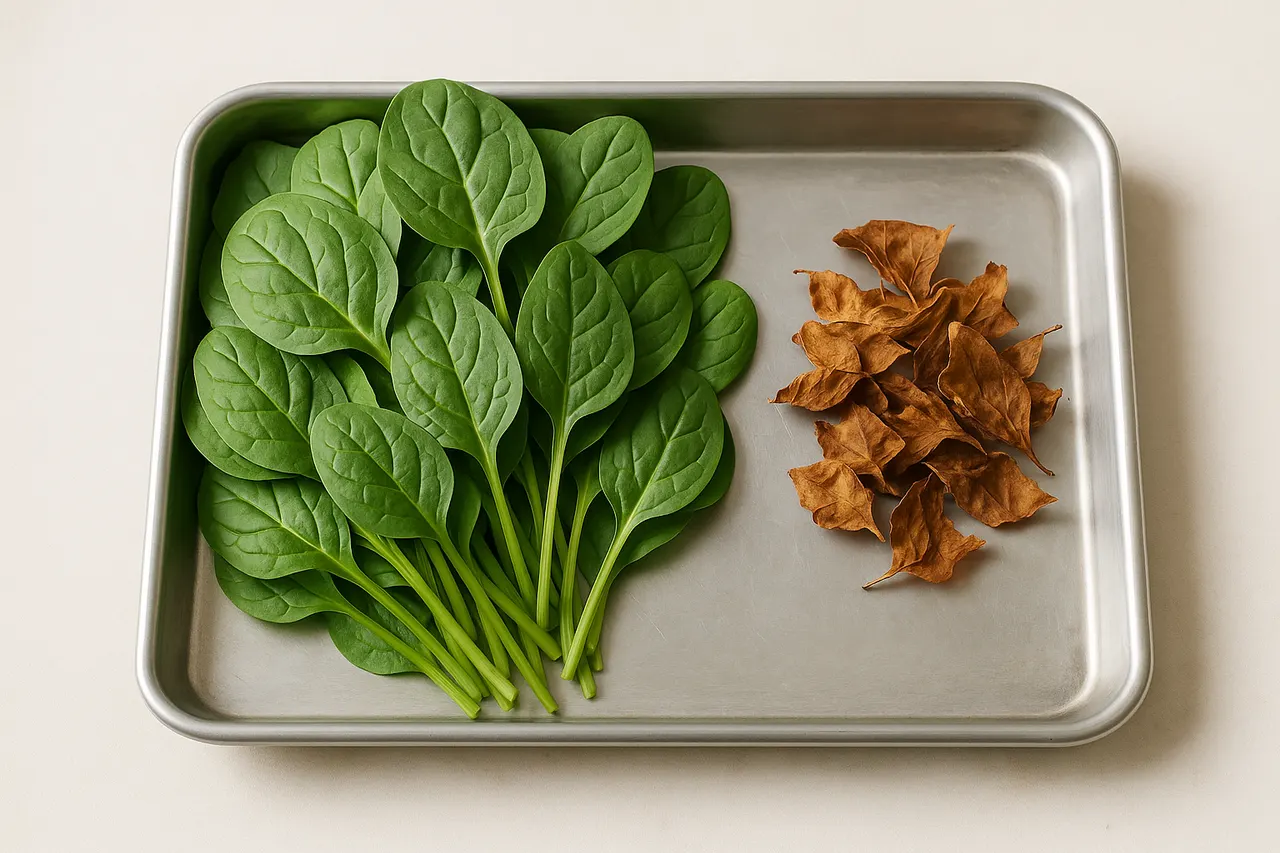
Discard yellow, slimy, or bruised leaves and strip lower leaves that would sit in water. Removing spoiling parts prevents bacterial growth and keeps the rest of the bunch healthy for longer.
Step 4: Store tender herbs in water
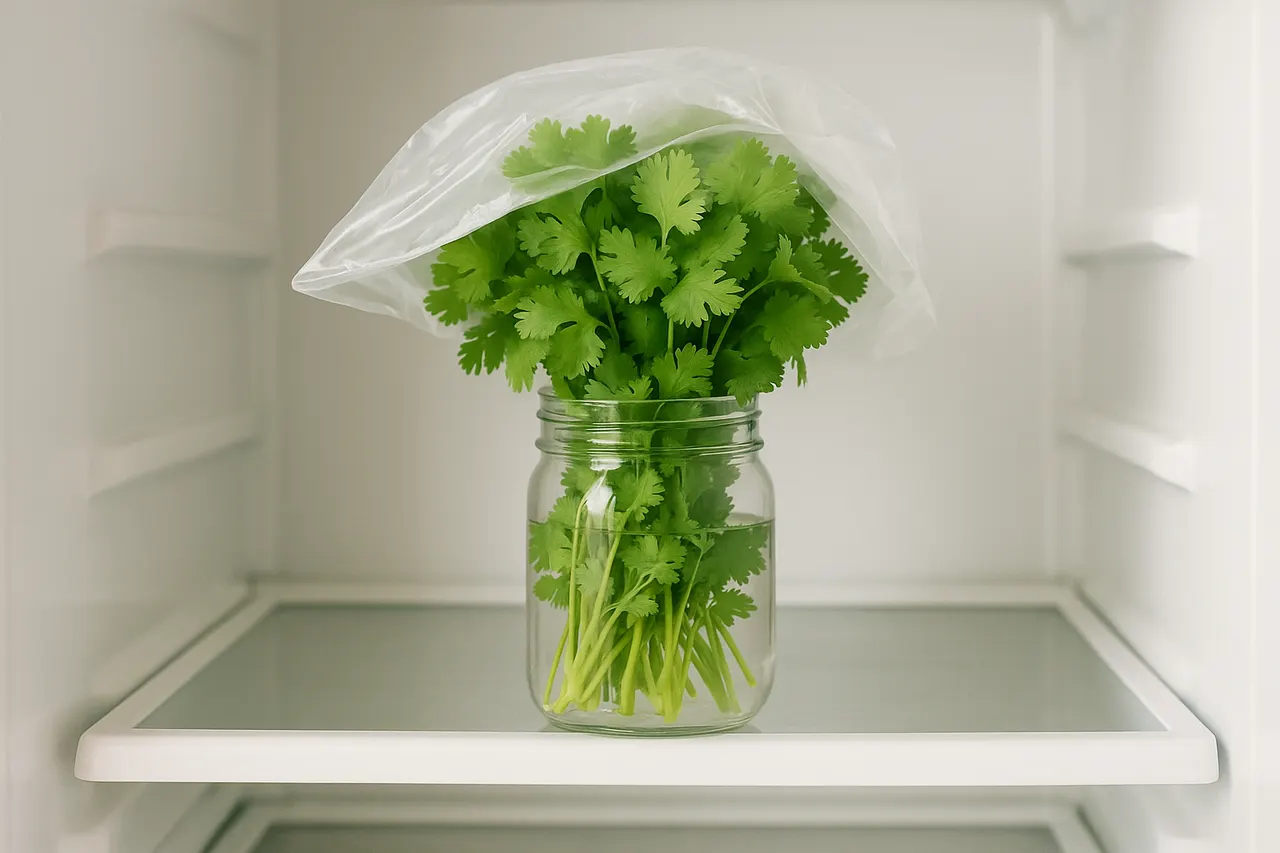
Place tender herbs upright in a jar with 1 to 2 inches of cold water, like a mini bouquet. Cover loosely with a plastic bag and refrigerate for 5 to 14 days, changing the water every 2 to 3 days to reduce bacteria.
Step 5: Wrap hardy herbs in paper
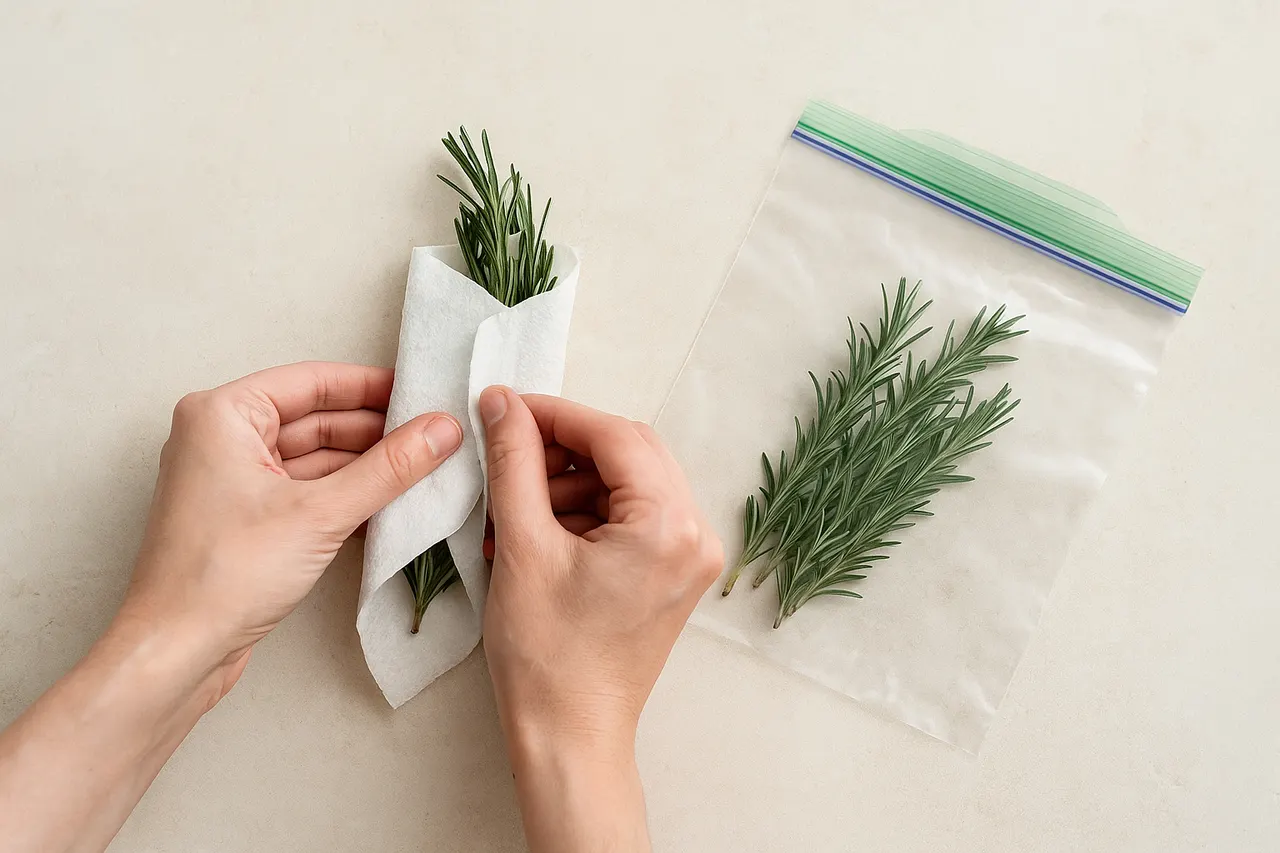
For rosemary, thyme, and sage, wrap sprigs loosely in a slightly damp paper towel and put them inside a resealable bag in the crisper drawer. The light moisture prevents drying while the towel absorbs excess humidity, keeping herbs fresh 1 to 3 weeks.
Step 6: Dry herbs for long-term storage
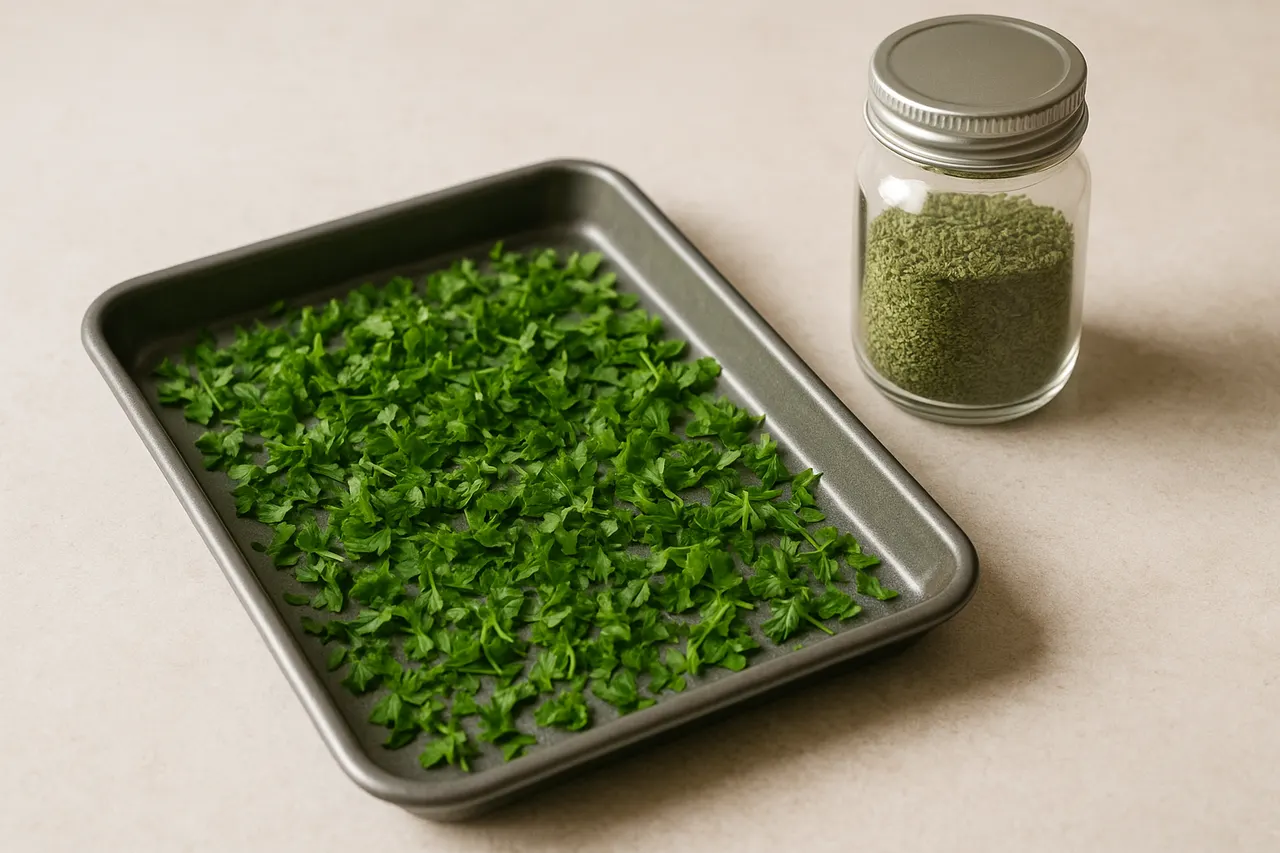
For multi-week storage, air-dry or oven-dry herbs at low heat (95–110°F / 35–43°C) until leaves crumble, usually 1–3 hours. Store crushed or whole dried leaves in airtight jars away from light for up to a year to concentrate flavor without refrigeration.
Step 7: Freeze herbs and oil cubes
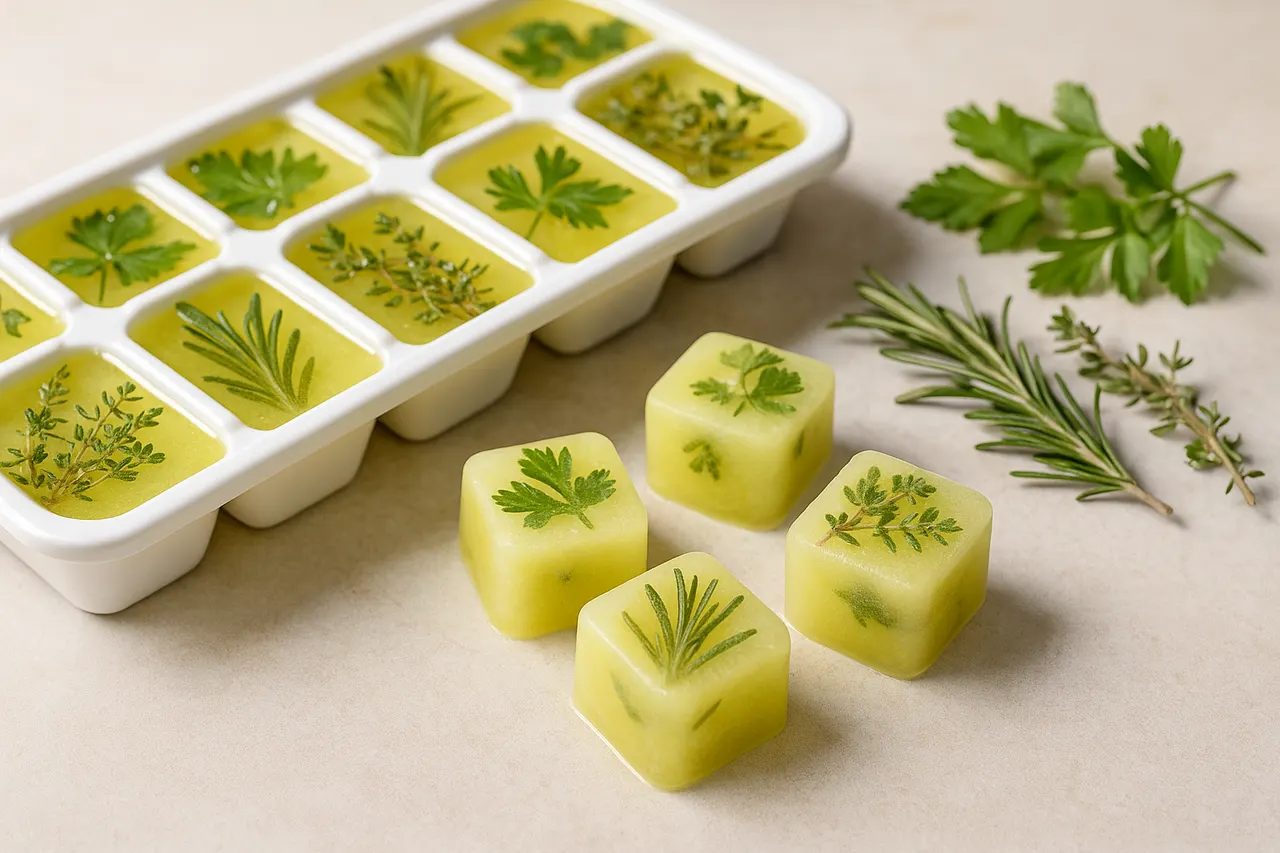
Chop herbs and pack into ice cube trays with water or olive oil, then freeze for 2–3 hours and transfer cubes to a freezer bag for up to 6 months. This preserves fresh flavor and is handy for soups, sauces, or sautés.
- Label containers with date to use older herbs first.
- Keep herbs away from ethylene-producing fruits like apples and bananas to slow spoilage.
- For basil, avoid refrigeration if possible—store at room temperature in water for best flavor retention up to 5 days.
- Replace water for jar-stored herbs every 48–72 hours and rinse stems gently when changing water.
- Use perforated bags or leave a small vent in sealed bags to balance humidity.
- If herbs become limp, plunge stems into ice water for 10–15 minutes to revive them.
- Do not leave tender herbs sitting in warm water at room temperature more than 12 hours—bacterial growth increases quickly.
- Avoid washing herbs before storage if you won’t dry them thoroughly; excess moisture promotes rot.
- Do not store herbs near heat sources or direct sunlight, which cause wilting and flavor loss.
- Discard herbs with a slimy texture or foul odor—using them risks foodborne illness.
Was this guide helpful?
More Food & Entertaining guides
How to make stovetop shakshuka with tender eggs and balanced tomato sauce
Shakshuka is a comforting North African–style skillet of eggs poached in a spiced tomato sauce. This guide walks you through building a balanced sauce and gently cooking tender eggs on the stovetop so yolks stay silky while the sauce is bright and flavorful.
How to make homemade sourdough starter and maintain regular feedings
Making a sourdough starter is a simple, rewarding kitchen project that captures wild yeast and beneficial bacteria to leaven bread. With just flour, water, and a little patience you can build a lively culture and keep it healthy with regular feedings. Follow the step-by-step routine below to create and maintain a starter that will power many loaves.
How to assemble and store layered salads so they don’t get soggy before eating
Layered salads are a colorful, make-ahead way to serve a crowd, but soggy ingredients can ruin the texture. With a few simple construction and storage strategies you can keep greens crisp and dressings separated for 24–72 hours. Follow these steps to assemble jars or bowls that travel well and taste fresh when served.